Solar Panels for Metal Fabrication & Engineering Workshops
MCS-certified fabrication solar specialists. From 60 kW to 500 kW, sized to your welding, cutting and machining load from your half-hourly meter data, with a free feasibility study and a fixed-price quote in 7 working days.
- MCS Certified
- NICEIC
- RECC
- TrustMark
- RC62 Fire-Safe
ACCREDITED FOR UK COMMERCIAL & INDUSTRIAL WORK






The one thing that makes fabrication a textbook solar candidate
UK metal-fabrication and engineering firms spend anywhere from around £18,000 to over £400,000 a year on grid electricity, and for a shop running welders, plasma and fibre-laser cutters, CNC machining centres, press brakes, a rotary-screw compressor and legally-required fume extraction, power is now the largest controllable cost after steel and labour. Fabrication is also one of the best-matched building types for solar in the country, for a simple reason competitors miss: it is overwhelmingly a single-shift, Monday-to-Friday, daytime operation, so the electrical demand lands almost exactly on top of the solar generation curve. That means 70 to 90 percent of everything a fabrication array generates is consumed on site at the full 25 to 30p import rate rather than exported cheaply, which is what drives the short three-to-seven-year paybacks the sector routinely sees. A typical portal-frame workshop roof of 500 to 3,000 square metres supports a 75 to 500 kWp array, cuts grid electricity by 30 to 60 percent, hedges a doubled and volatile power bill for 25 years, and provides the on-site renewable line item that automotive, construction-steel, rail and offshore customers increasingly demand in their supplier audits.
The reason is timing. Almost no competitor models it, but it is the whole argument: a metal-fabrication shop runs Monday to Friday in daylight hours, so its electrical demand sits directly under the solar curve. Your spiky welders, plasma and laser cutters ride on top of a large, near-constant baseload, the rotary-screw compressor and the legally-required fume extraction, and solar feeds that baseload smoothly while the process peaks soak up midday generation. Very little is exported, which is exactly why paybacks are short.
- We size from your half-hourly meter data and your real fabrication load, welders, compressor, LEV, laser chillers and CNC, not from a rule of thumb.
- We design the array around your legally-required LEV weld-fume extraction, so the PV never blocks a fume route, a detail no generalist even checks.
- We understand fabrication's spiky, high-power, single-shift load and turn it into the sector's strongest solar self-consumption case.
- MCS-certified, NICEIC-registered, RC62 fire-safe design and a 10-year insurance-backed workmanship warranty as standard.
The commercial case for fabrication solar
From first call to commissioning in 3-6 months
A clear, transparent process, no hidden steps, no high-pressure sales.
- 01Day 1-7
Free desk feasibility
We pull your half-hourly meter data and roof drawings and model an array sized to your welding, cutting, machining and compressor load.
- 02Week 2-4
On-site survey
Structural and electrical engineers survey the portal frame, crane rails, extraction routes and supply. Fixed-price proposal follows.
- 03Month 1-3
Permits & G99
We confirm permitted-development status, submit the G99 grid application, and coordinate any LEV or DSEAR constraints.
- 04Month 3-6
Install & commission
On site for one to four weeks, working around your production. Commissioning, staff training and monitoring active.
Specialists across every fabrication trade
Metal fab, structural steel, welding, CNC, laser and plasma, and powder-coating each have their own load, sizing and compliance. Pick yours.
 Most common
 Metal Fabrication Workshops
60-250 kW. 5-year payback. £45,000-£185,000.
Structural Steel Fabrication
150-500 kW. 4.5-year payback. £100,000-£330,000.
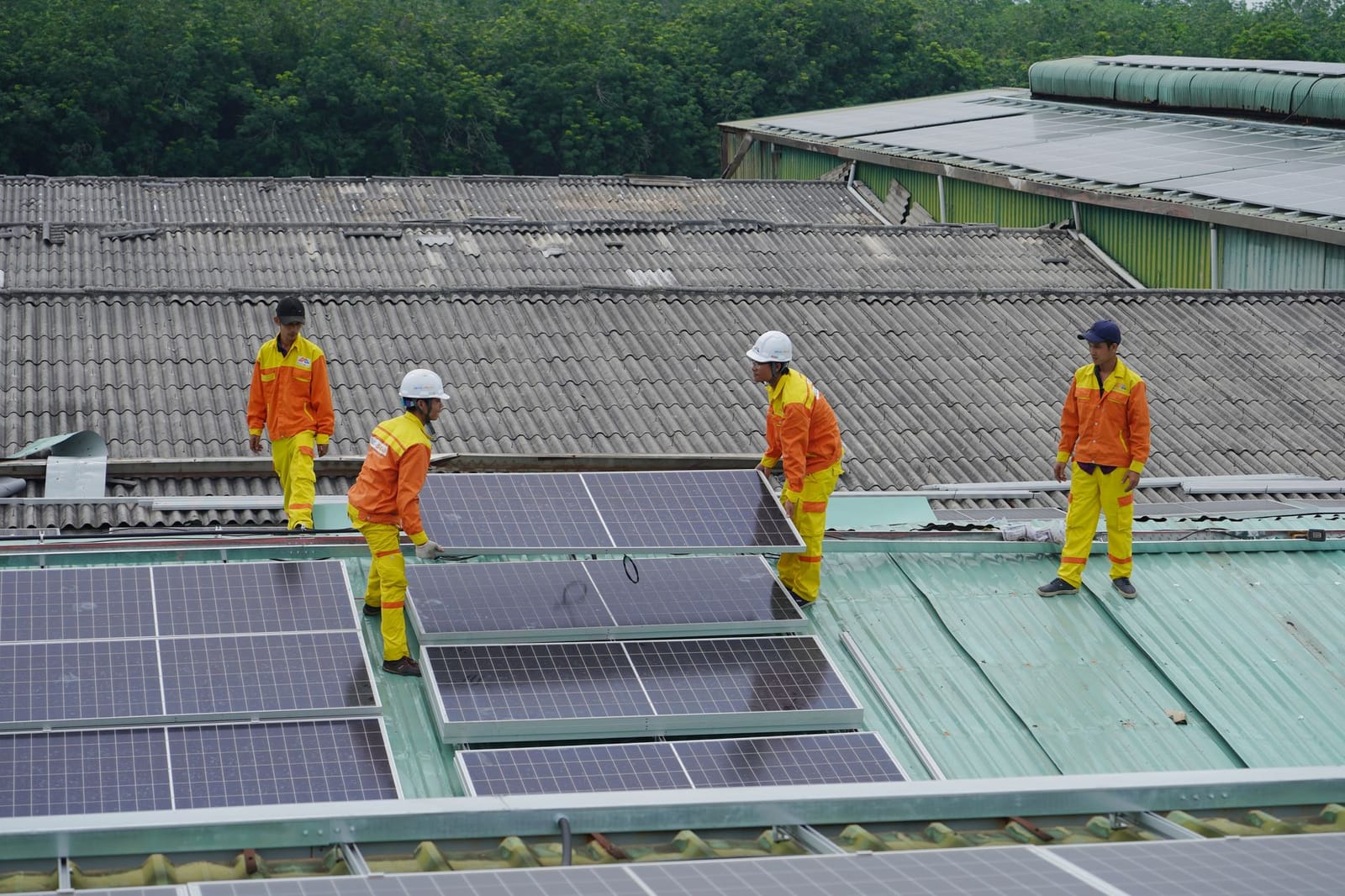
Welding & Engineering Workshops
40-200 kW. 5.5-year payback. £30,000-£150,000.
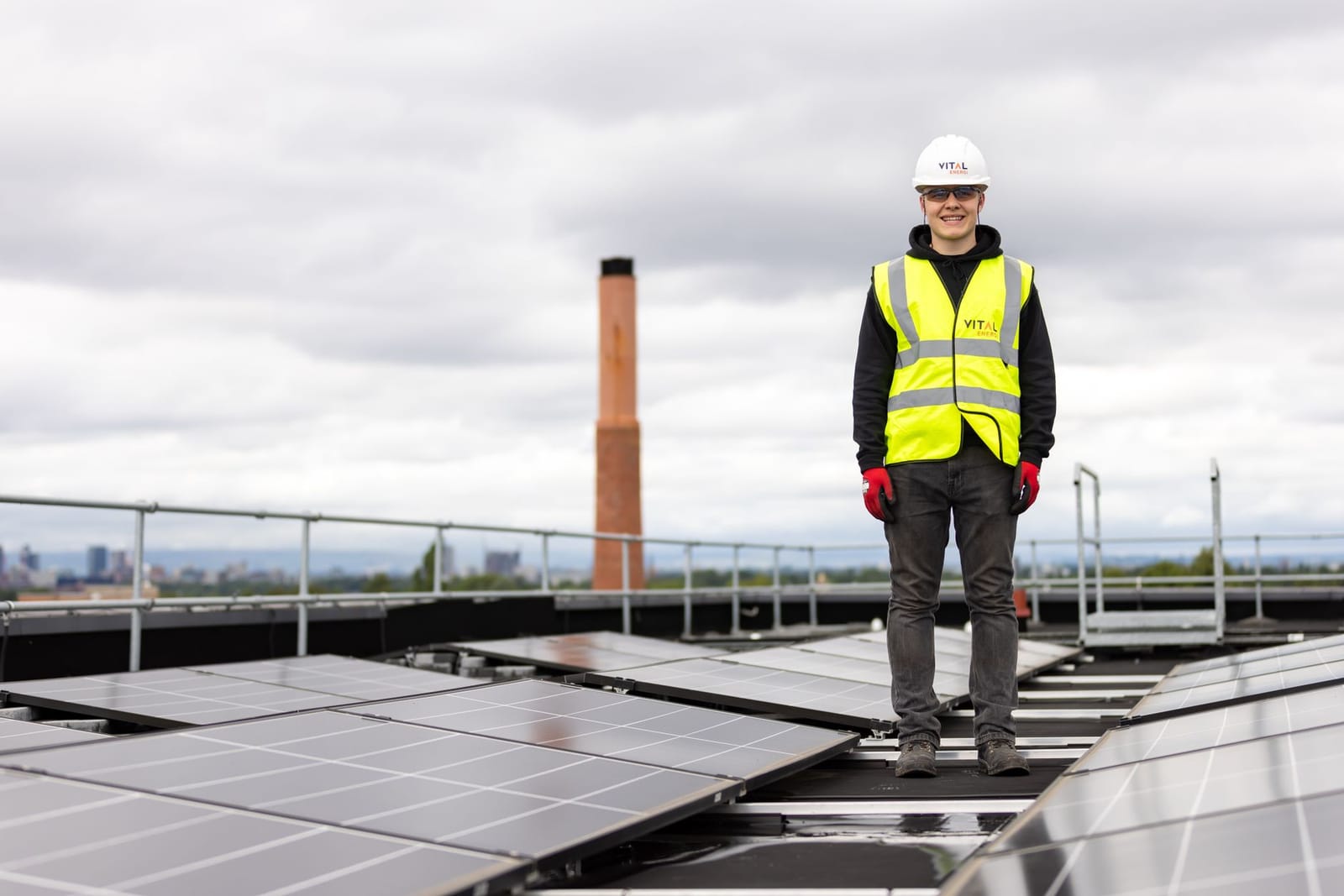
CNC Machining Shops
80-350 kW. 4.5-year payback. £58,000-£250,000.
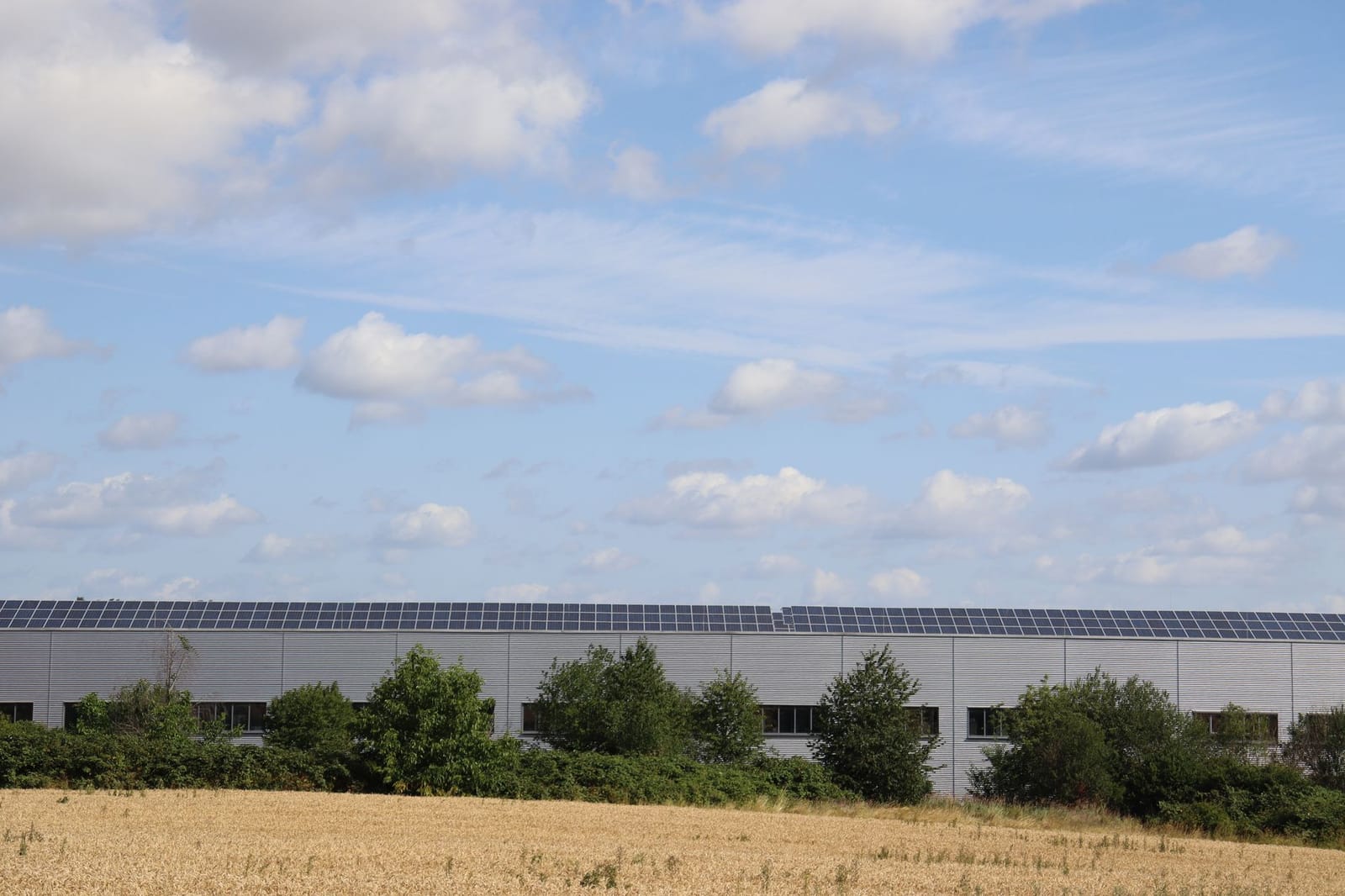
Laser & Plasma Cutting
100-400 kW. 4-year payback. £70,000-£285,000.
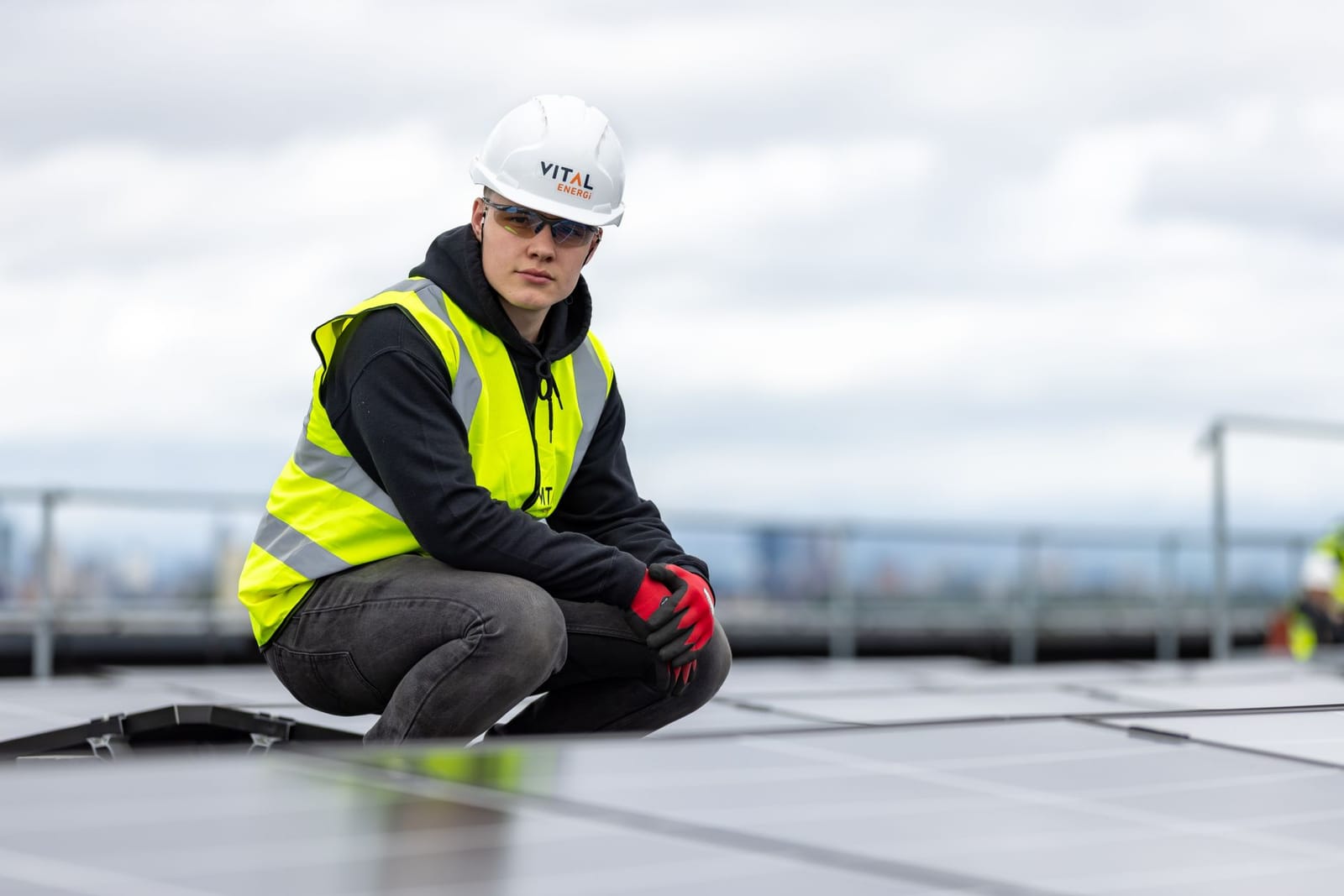
Powder Coating & Finishing
100-450 kW. 4.5-year payback. £70,000-£320,000.
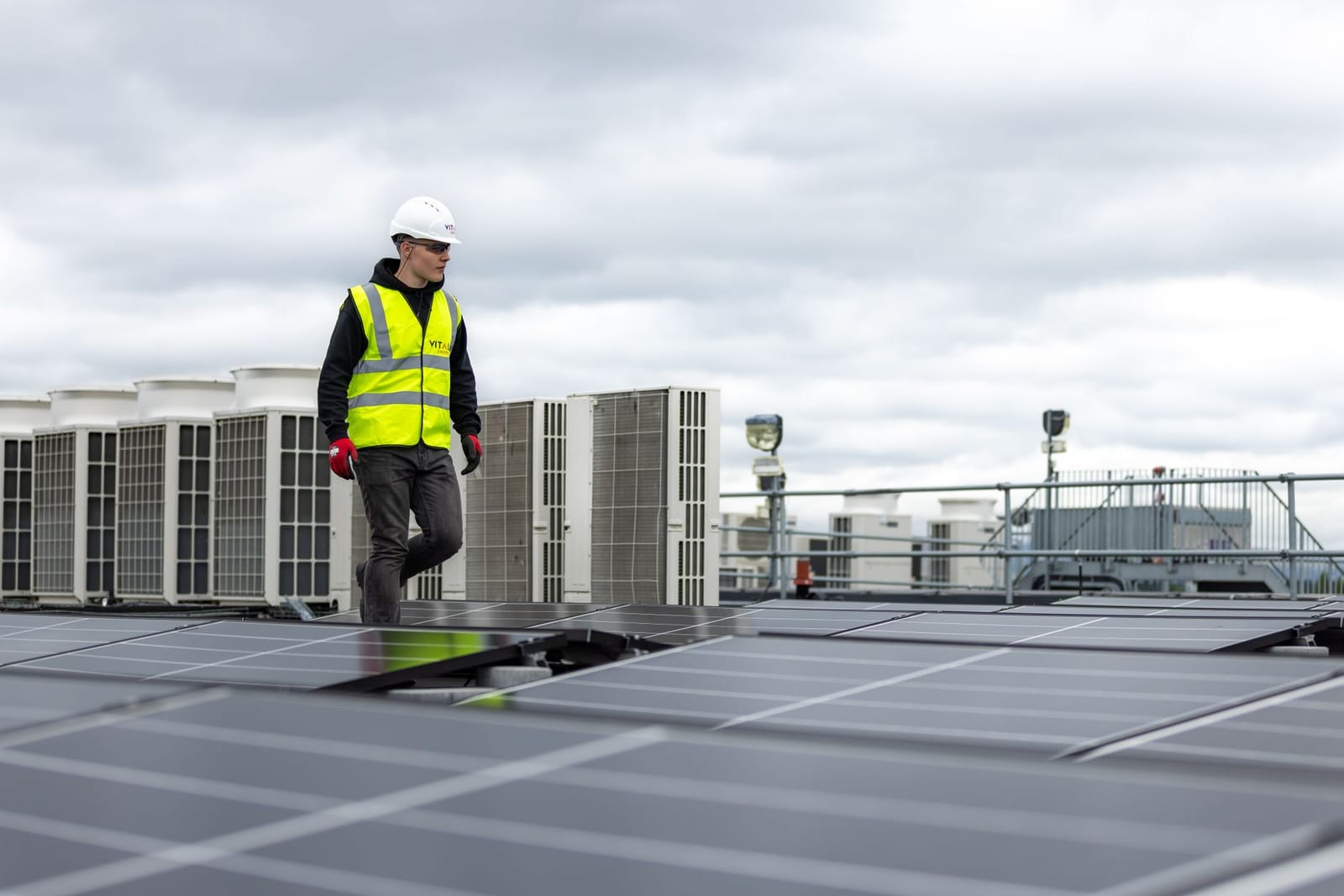
180 kW rooftop install for a West Midlands sheet-metal and CNC fabricator
A trade fabrication shop near Wolverhampton running two fibre lasers, press brakes, a bank of MIG welders and a 45 kW rotary-screw compressor on a single day shift, in a 1,200 square metre portal-frame unit. The owner faced a doubled electricity bill and net-zero questions in tenders from a rail-sector customer. The steady laser-chiller and compressor baseload made the site an ideal high-self-consumption candidate.
Fabrication solar specialists vs generalist contractors
| Specialist (us) MCS-certified, fabrication-focused | Generalist contractor General electrical / building | In-house DIY Self-managed | |
|---|---|---|---|
| MCS commercial certification | |||
| Sizes from your half-hourly meter data | |||
| Designs the array around LEV weld-fume extraction | |||
| Checks crane-rail residual roof load | Sometimes | ||
| DSEAR-aware near powder-coat & spray booths | |||
| RC62 fire-safe design + IWA 10-yr warranty | |||
| PPA / asset finance for owner-occupiers & tenants | Sometimes |
BEFORE YOU BUY
The four decisions that decide your payback
A fabrication solar project is not just panels on a roof. Four decisions, more than anything else, set your return: what it costs, how big it should be, how you connect it, and how you fund it. These guides walk through each one for a fab shop.
What it costs
Real UK prices per kWp and by workshop size, before and after tax relief.
How to size it
Why you size to your daytime welding, cutting and compressor load, not your roof.
Grid connection (G99)
Three-phase supplies, DNO timelines, and export limitation for heavy fab plant.
How to fund it
Cash and AIA, asset finance, or a zero-capex PPA for owned or leased units.
Solar built around your fabrication load, not a catalogue
UK metal-fabrication and engineering firms now pay 25p to 30p per kWh on commercial electricity contracts, roughly double the rate of three years ago, and for a shop running welders, plasma and fibre-laser cutters, CNC machining centres and a rotary-screw compressor, power is the largest controllable cost after steel and labour. On fixed-price, competitively-tendered fabrication work there is often nowhere to pass that cost on, so it comes straight off the margin. On-site solar is the most reliable way to take a permanent slice out of that bill, and fabrication happens to be one of the best-matched building types for it in the country.
Sized to your daytime load, not your roof area
We start every design from 12 months of your half-hourly meter data and your roof drawings, then size the array so annual generation matches roughly 70 to 90 percent of daytime consumption. The trick is to anchor the design on the loads that run all day, the compressor that cycles continuously to hold line pressure, the fume extraction that must run whenever anyone welds, the laser chiller, and CNC coolant, then let the spiky welding, plasma and laser peaks soak up midday generation. As a guide, one kWp of panels needs about five to six square metres of unshaded roof and generates 900 to 1,000 kWh a year in the UK, so a 1,000 square metre workshop roof typically supports 150 to 180 kWp. Our savings calculator gives an indicative figure in seconds, and the cost guide sets out real prices by workshop size.
The spiky, high-power load is a feature, not a problem
Fabricators often assume their arc welders, plasma cutters and fibre lasers are too peaky for solar. The opposite is true. Those loads are intermittent, high-current draws that sit on top of a large, near-constant daytime baseload, and it is that baseload the array feeds most smoothly. A modern fibre laser draws far more for its chiller, drives and assist-gas compressor than for the beam itself, and all of those run continuously. Where demand charges or kVA peaks are heavy, we model a battery alongside the array to shave them and to shift a powder-coat oven or compressor warm-up onto stored midday surplus. Everything is sized from your actual half-hourly data, never a rule of thumb.
We design the array around your extraction, because we have to
Since 2019 the HSE has treated all welding fume, including mild-steel fume, as a carcinogen, and its welding-fume guidance requires local exhaust ventilation for all indoor welding regardless of duration or material. That LEV ductwork and its discharge stacks penetrate and vent through the very roof your panels go on. A generalist rarely even checks; we plan the panel layout, cable routing and maintenance walkways around your existing and future extraction so the array never blocks a legally-required fume route, and the extraction load itself becomes an obligatory daytime load the solar offsets. On structural-steel shops we do the same with EOT crane rails, deducting their dead load from the roof's residual capacity before a single panel is specified.
Every fabrication trade sizes differently
A single-bay welding and jobbing shop, a sheet-metal and CNC unit, a structural-steel fabricator under overhead cranes, a laser-profiling house and a powder-coating line all size and pay back differently, which is why we build around the trade rather than swapping a noun on a template. Explore the profile for metal fabrication workshops, structural steel fabrication, welding and engineering workshops, CNC machining shops, laser and plasma cutting and powder-coating and finishing, each with its own typical sizing, payback and compliance notes.
Funded the way that suits your balance sheet, owned or leased
Most fabrication installs do not need capital up front. Asset finance spreads the cost over five to seven years and is usually cash-flow positive from month one, because the finance payment is smaller than the bill it replaces. A Power Purchase Agreement needs no capex at all: a funder owns the system and you buy the power at a fixed rate below grid, which suits tenants and shorter leases. If you buy outright, the Annual Investment Allowance lets a profitable company deduct the first £1m of qualifying spend from taxable profit in year one, and the VAT is reclaimable for a VAT-registered business. Solar is special-rate plant, so it does not qualify for full expensing, and we are careful to model the relief you can actually claim rather than the headline everyone else quotes. See the routes side by side on the grants and funding page.
Grid connection and older roofs are the two things to check early
For anything above about 11 kW on a three-phase supply, the G99 grid-connection application to your Distribution Network Operator is often the longest item in the programme, so we submit it alongside the structural survey to start the clock on day one and use export limitation or a battery where capacity is tight. The other early check is the roof itself: many older fabrication units have tired three-phase supplies, and asbestos-cement or fragile single-skin roofs that cannot take rooftop PV directly. We survey both before you commit, and where a roof needs over-cladding we can often fund it inside the same project. Local grid capacity and council net-zero targets shape a project too, so each of our area guides covers the local picture for a major UK engineering centre.
An honest specialist, not a clipboard sales call
We are MCS-certified for commercial work, NICEIC-registered, and RECC and TrustMark licensed, our rooftop design follows the RC62 fire-safety Code of Practice, and every install is covered by a ten-year insurance-backed workmanship warranty on top of the 25-year panel performance warranty. If your roof, load profile or tenure do not suit solar, we will say so. The proposal is fixed price: what you sign is what you pay. When you are ready, request a free quote or read the answers to the questions we hear most on our FAQs page.
Fabrication areas we cover
Solar panels for fabrication delivered across the UK's engineering and metalworking heartlands. Click any area for local industrial data, council schemes and grid connection timescales.
London
Greater London. 8,908,081 population. Greater London Authority 2030 net zero.
Birmingham
West Midlands. 1,141,816 population. Birmingham City Council 2030 net zero.
Leeds
West Yorkshire. 793,139 population. Leeds City Council 2030 net zero.
Sheffield
South Yorkshire. 584,853 population. Sheffield City Council 2030 net zero.
Manchester
Greater Manchester. 568,996 population. Manchester City Council 2038 net zero.
Bradford
West Yorkshire. 546,412 population. Bradford Council 2038 net zero.
Common questions
The questions we hear most from fabrication and engineering owner-managers.
How much do solar panels for a metal fabrication workshop cost in the UK?
A typical fabrication solar installation ranges from around £30,000 for a small welding or engineering unit to over £320,000 for a large laser-profiling or powder-coating plant, depending on system size. Cost per kWp is usually £700 to £810 for smaller systems, falling to roughly £520 to £700 above 250 kWp. Most SME installs are fully expensed in year one under the Annual Investment Allowance, and paybacks typically land between three and seven years thanks to high daytime self-consumption.
Why is fabrication such a good fit for solar panels?
Because metal fabrication is overwhelmingly a single-shift, Monday-to-Friday, daytime operation, its electrical demand lands almost exactly on the solar generation curve. That means 70 to 90 percent of everything the array generates is used on site at your full 25 to 30p import rate rather than exported cheaply at 12 to 16p. High self-consumption is what drives short paybacks, and a fabrication shop has it built in, unlike a home that sits empty during the day or a 24/7 plant that exports more of its midday output.
What size solar system does my fabrication shop need?
System size should match your daytime load, not your roof area. We pull 12 months of half-hourly meter data and size the array to cover roughly 70 to 90 percent of daytime consumption, anchored on the steady loads that run all day, your compressor, LEV extraction, laser chiller and CNC coolant. For UK fabrication that is typically 60 to 500 kWp: around 20 to 50 kWp for a small jobbing unit, 75 to 150 kWp for a mid-size sheet-metal and CNC shop, and 250 to 500 kWp-plus for a structural-steel, laser or powder-coating plant.
Will solar cope with the spiky loads from welders and laser cutters?
Yes. Welders, plasma cutters and fibre lasers are high-power, intermittent loads, but they sit on top of a large, near-constant daytime baseload from your compressor, LEV extraction, laser chiller and CNC auxiliaries. Solar feeds that steady baseload smoothly, and the spiky process peaks soak up the midday generation. Where demand charges or kVA peaks are heavy, we model a battery alongside the array to shave them. Everything is sized from your actual half-hourly data.
Does the LEV weld-fume extraction affect the solar installation?
It has to be designed in. HSE rules (Safety Bulletin STSU1-2019) require Local Exhaust Ventilation for all indoor welding, because all welding fume including mild steel is now classed as a carcinogen, and that extraction ductwork and its discharge stacks penetrate and vent through the same roof as the array. We plan the panel layout, cable routing and maintenance walkways around your existing and future extraction penetrations so the PV never blocks a legally-required fume route, and the extraction load itself becomes an obligatory daytime load the solar offsets.
Can I install solar on a leased industrial unit?
Yes. Where you own the unit it is straightforward. Where you lease, we work with landlord consent or a green-lease addendum, or fund the array through a Power Purchase Agreement where a funder owns the system and you buy the power below grid for the life of your lease with no capital outlay. If your remaining term is short we size a smaller, faster-payback system or use a PPA so you are never out of pocket. We will be honest if the tenure does not suit solar.
Get a free fabrication solar quote
Responds within one working day
- 1. Free desk feasibility from your meter data and roof, no obligation.
- 2. Site survey and a fixed-price proposal, itemised in writing.
- 3. Install and aftercare by MCS-certified engineers.
- MCS Certified
- NICEIC
- RECC
- TrustMark